
Happy hour in the dark
5, 6, 7 June 2026 – Ancient residence of the manger
The activity does not require reservations, subject to availability.
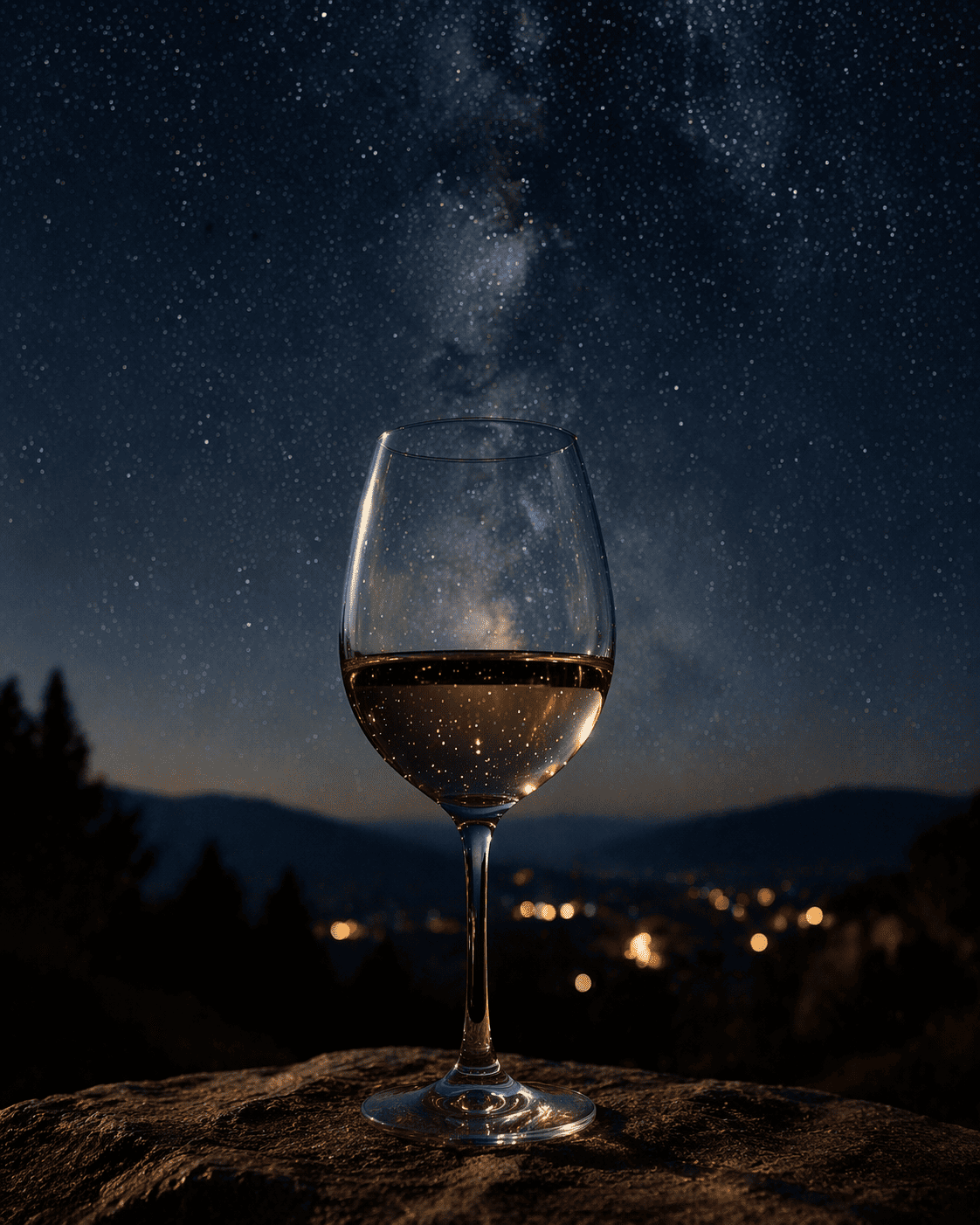
In a thirteenth century residence, an aperitif in the dark awakens our senses, inviting us to taste each moment and listen. Astronomy interweaves with Archeology, Psychology and Architecture, creating a unique multisensory experience.
Stories studded with mistakes
June 6, 2026 | 19:30
By Alan Zamboni
Constellations between myth and reality. Stars have always been seen as an incredibly charming mystery. The ancients had catalogued them into constellations and filled the sky with mythological stories. Over time, we learned to study them and exploit their light to understand what they were made of, and in turn what we are made of. As usual in science, this has not been an easy path, sometimes full of mistakes, dazzles but also brilliant intuitions… in the end, we are cafes with a shocking truth: we are children of the stars.
Searching for Life casting about in the dark
June 6, 2026 | 17:00 and 19:00
By Ulisse Cardini (marine biologist) and Stefano Sandrelli (astrophysicist)
From the depths of the oceano to the depths of the sky: two extreme, far-away worlds, still unexplored. Who could live in these dark environments? We tend to search for life in places similar to the Earth, but this is probably a mistake: in the nether layers of the oceans there are organisms that thrive where it would be impossible for us to survive. Could the same happen on planets very different from ours? How can we recognize life where it is so different from our own life, and how can we communicate with organisms so different from us? In this happy hour in the dark, a marine biologist and an astrophysicist talk about the discoveries, the errors and the open questions in the search for life in the abysses and in space. A journey to discover life forms which challenge our imagination.
When the senses deceive
June 7, 2026 | 17:00 and 19:00
By Massimo Grassi (psychologist)
Is it the Sun that goes around the Earth or viceversa? Is the sky dark between one star and the other? Is what you feel really what it is? A drink in the sunshine to discover how easy it is to believe in what really is not so. We will test the senses and discover that perception is not a faithful mirror of reality, but rather a story which the mind builds on the fly… and sometimes gets it wrong.
Senses involved



Biographies
Alan Zamboniis an Italian science communicator, specialized in Physics, Astronomy and Science History. Alan obtained a degree in Civil Engineering at the University of Brescia and a degree in Modern Literature at the University of Verona. Since 2015 he has managed the YouTube channell “Curiuss” and brings science on stage and in the schools with his theatre shows. In 2023 he started “In 10 cities”, a series of scientific documentaries, which describe great European cities through the history of science. As author, Alan published “A quattro zampe nel cosmo” (Four-legged in the Cosmos, 2018) and “Fallisci ancora, fallisci meglio” (Fail again, fail better, 2021), produced by the “Associazione Culturale Atelier”. In 2025 Mondadori published his first novel, “L’atomo sfuggente” (The elusive Atom).
Stefano Sandrelliis an astrophysicist, he obtained a Ph.D. in Astronomy and a Master degree in Science Communication at SISSA. Technology executive at INAF, Stefano is the manager of the ’Office of Astronomy for Education Center Italy of the International Astronomical Union (IAU). Journalist, he is the author of regular columns published by Focus Junior, Sapere and edu.inaf.it. He also published essays, novels and stories for both children and grown-ups with Feltrinelli, Einaudi Carthusia, Springer. Stefano was awarded an Andersen prize (best book series by Feltrinelli) and a “G. Dosi” prize with “Nello spazio con Samantha” (In the Space with Samantha), written with the astronaut Samantha Cristoforetti. In March 2025 he published with Mimesis “ Il coraggio di ridere”(The Courage to laugh) – an ironical biography of Giacomo Leopardi. Stefano has been collaborating for years with “Realtà Debora Mancini”.
Ulisse Cardiniis a marine biologist at the “Anton Dohrn” Zoological Station – National Institute for Biology, Ecology and Marine Biotechnologies, where he heads the Marine Symbiomes Research Group. His research focuses upon marine symbiosis and the nutrient cycles in coastal ecosystems, in particular the meadows of marine plants and organisms living on them. He studies how bacteries, bivalves, sponges and marine plants interact among them and their surroundings, often in extreme and as yet unexplored conditions, as well as in the vicinity of overcrowded beaches. His projects range from the Mediterranean to tropical oceans, in the framework of Europeand and International collaborations.
Massimo Grassiobtained his PhD in Experimental Psychology at Padua University. He spent his Post-Doc period at the University of Udine, and, as a visiting scientist and Marie Curie fellow at the University of Sussex. From 2006 to 2018 he has worked as researcher at Padua University. In 2018 he was appointed associate professor in the same University. He studies uditory perception, music psychology, and their possible applications in daily life. He was coordinator of the experimental section of the Italian Psychology Association, and is member of the steering committee of the Italian Reproducibility Network. He organized many events of scientific dissemination: recently, the art exhibition “L’occhio in gioco” (The eye at stake) in the palazzo of the “Monte di Pietà” (Pawnshop) in Padua.